



About the course
Learn how to create an axis-based bridge model using Computer Aided Bridge Design (CABD).
You define girder and deck slab axes, create secondary axes, place diaphragms, establish geometric references, and control rotations for curved bridge layouts. The content demonstrates deck slab generation between placements, cantilever adjustments, diaphragm alignment, and reference management for adaptive geometry.
You also create load actions, load cases, line loads, area loads, crash barrier loads, and prestressing load cases. Finally, you verify how loads and geometry automatically follow alignment changes, enabling efficient modelling of straight and curved composite bridge structures.
What you'll learn
- Create axis-based bridge geometry and alignments
- Generate deck slabs using placements and secondary axes
- Configure diaphragm references and rotational behaviour
- Define load actions, load cases and prestressing loads
- Apply line and area loads that follow alignment changes
Course content
Instructors
Enrolment options
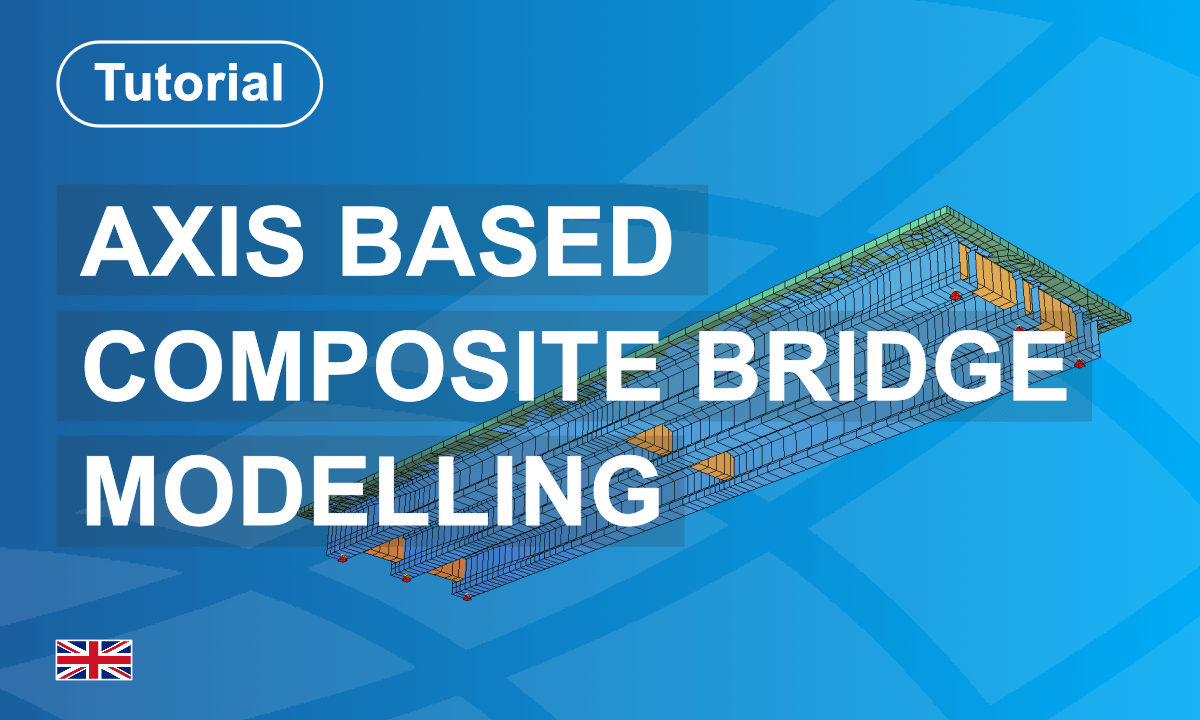
Axis Based Modelling of a Concrete Composite Bridge
Learn how to create an axis-based bridge model using Computer Aided Bridge Design (CABD).
You define girder and deck slab axes, create secondary axes, place diaphragms, establish geometric references, and control rotations for curved bridge layouts. The content demonstrates deck slab generation between placements, cantilever adjustments, diaphragm alignment, and reference management for adaptive geometry.
You also create load actions, load cases, line loads, area loads, crash barrier loads, and prestressing load cases. Finally, you verify how loads and geometry automatically follow alignment changes, enabling efficient modelling of straight and curved composite bridge structures.
- Non-editing teacher: Guido Altersberger
- Enrolled students: 25
Self enrolment as 'Student'
- Language: English
- Level: Beginner
- Duration : 1 Hour
- Platform: AutoCAD
- Application: SOFiPLUS
- Version: 2024
This course includes
Resources