



About the course
This tutorial introduces practical nonlinear analysis and design workflows for reinforced concrete structures using SOFiSTiK.
Across multiple example models, it explains how nonlinear material behaviour, cracking, stiffness reduction, spring elements, long-term deflection, beam behaviour, wall capacity, and volume elements are handled in finite element analysis. The lessons demonstrate how to define realistic material properties, create suitable load combinations, interpret iterative solver behaviour, and evaluate structural response under serviceability and ultimate limit states.
Special attention is given to cracked concrete modelling, reinforcement effects, and the differences between shell, beam, and solid element approaches for reliable engineering assessment.
What you'll learn
- Nonlinear concrete models correctly set up for finite element analysis
- Cracking effects interpreted in slabs, beams, walls, and solid elements
- Load combinations prepared for nonlinear serviceability and ultimate checks
- Spring elements and support nonlinearity are integrated into structural models
- Solver convergence and result evaluation are handled in iterative nonlinear analysis
Course content
Instructors
Enrolment options
Nonlinear Analysis and Design of Concrete Structures
This tutorial introduces practical nonlinear analysis and design workflows for reinforced concrete structures using SOFiSTiK.
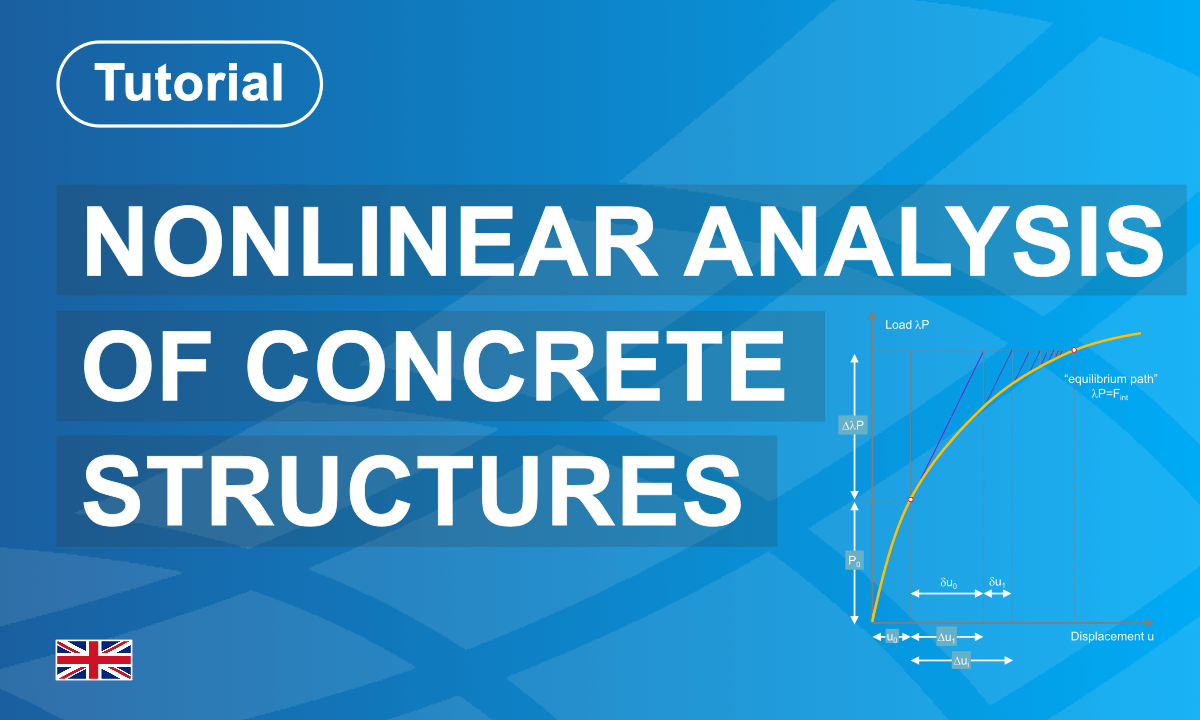
Across multiple example models, it explains how nonlinear material behaviour, cracking, stiffness reduction, spring elements, long-term deflection, beam behaviour, wall capacity, and volume elements are handled in finite element analysis. The lessons demonstrate how to define realistic material properties, create suitable load combinations, interpret iterative solver behaviour, and evaluate structural response under serviceability and ultimate limit states.
Special attention is given to cracked concrete modelling, reinforcement effects, and the differences between shell, beam, and solid element approaches for reliable engineering assessment.
- Non-editing teacher: György Schmidt
- Enrolled students: 10
Self enrolment as 'Student'
- Language: English
- Level: Expert
- Duration : 2 Hours
- Platform: AutoCAD
- Application: Structural Desktop
This course includes
Learning Module
Resources