



About the course
This course explains the nonlinear pushover analysis workflow for reinforced concrete bridge piers using SOFiSTiK 2026. The content covers structural modelling, material nonlinearities, load application, and evaluation of displacement capacity and plastic hinge behaviour.
Participants learn how to define analysis parameters, interpret pushover curves, and assess structural performance under increasing lateral loads. The tutorial also demonstrates result visualization and engineering interpretation for bridge design and assessment tasks.
The workflow supports practical applications in seismic engineering and nonlinear bridge analysis while improving understanding of structural reserve capacity and failure mechanisms in reinforced concrete bridge substructures.
What you'll learn
- Create nonlinear bridge pier models for pushover analysis
- Define material nonlinearities and analysis parameters
- Apply lateral loads and evaluate displacement capacity
- Interpret pushover curves and plastic hinge behaviour
- Assess structural performance of reinforced concrete bridge substructures
Course content
Instructors
Enrolment options
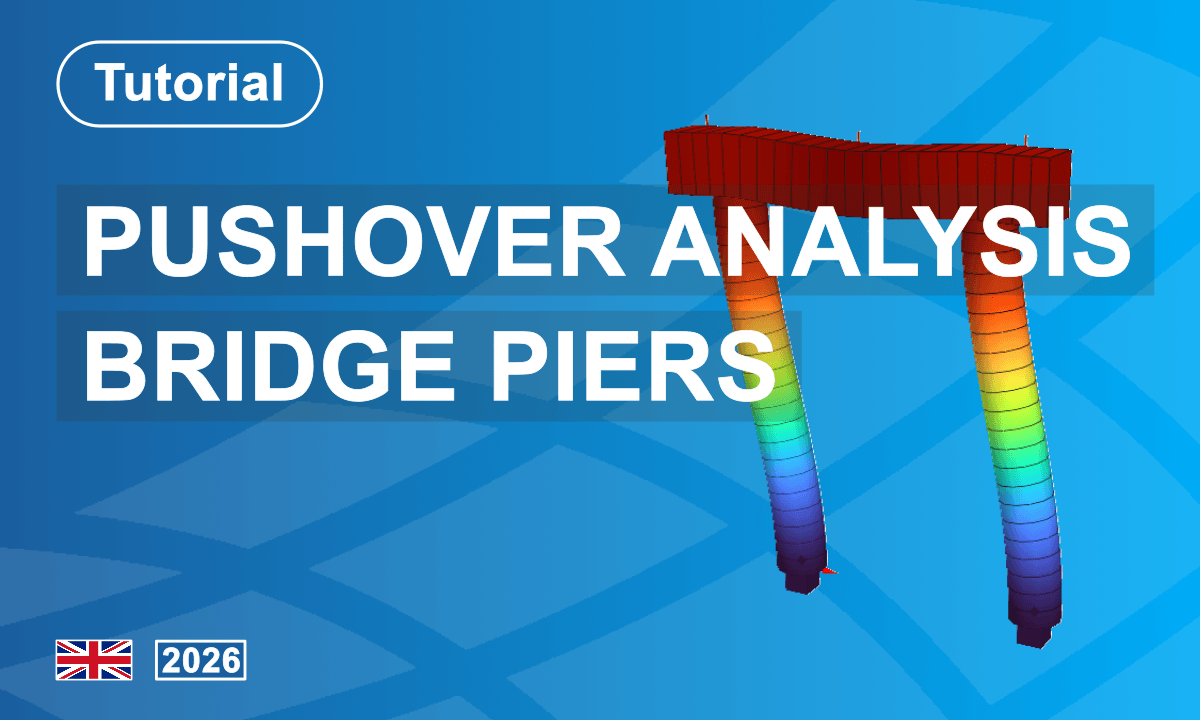
Pushover Analysis of Bridge Piers
This course explains the nonlinear pushover analysis workflow for reinforced concrete bridge piers using SOFiSTiK 2026. The content covers structural modelling, material nonlinearities, load application, and evaluation of displacement capacity and plastic hinge behaviour.
Participants learn how to define analysis parameters, interpret pushover curves, and assess structural performance under increasing lateral loads. The tutorial also demonstrates result visualization and engineering interpretation for bridge design and assessment tasks.
The workflow supports practical applications in seismic engineering and nonlinear bridge analysis while improving understanding of structural reserve capacity and failure mechanisms in reinforced concrete bridge substructures.
- Non-editing teacher: Filip Orsanic
- Enrolled students: 4
Self enrolment as 'Student'
- Language: English
- Level: Advanced
- Duration : 2 Hours
- Platform: AutoCAD
- Application: Structural Desktop
- Version: 2026
This course includes
Resources